
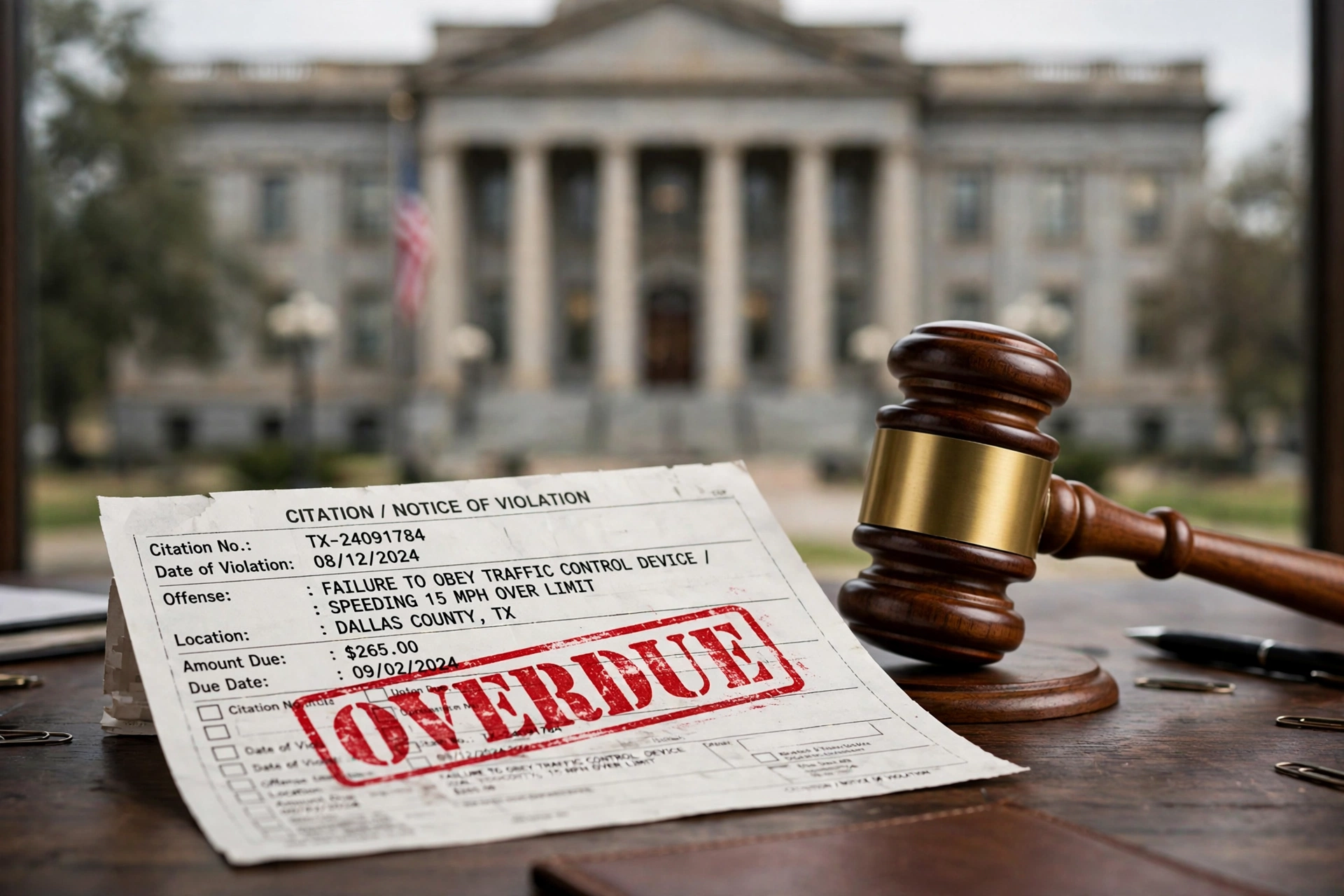
That ticket’s been sitting on your kitchen counter for three weeks now. You keep meaning to deal with it, but life gets busy, and honestly — what’s the worst that could happen if you just… don’t?
Quite a lot, actually. Texas doesn’t take unpaid tickets lightly, and the consequences escalate fast — from extra fines to a warrant for your arrest. Let’s walk through exactly what happens when you ignore a Texas traffic ticket, on what timeline, and how to fix it if you’re already behind.
Days 1–30: The Grace Period (Sort Of)
Your citation lists a court appearance date — usually 30 days or less from when you got the ticket. During this window, nothing bad has happened yet. This is your chance to handle it cleanly: plead, request ticket dismissal through defensive driving, or set up a payment plan.
Do any of those things now and the story ends here. Ignore it, and the clock starts working against you.
After the Deadline: Failure to Appear
Miss your court date without resolving the ticket and the court records a “failure to appear” (FTA). This is where things get expensive:
- Late fees pile on. Courts add penalties on top of your original fine — often $25–100+ extra, depending on the jurisdiction.
- A warrant can be issued. In Texas, failure to appear is itself a separate misdemeanor offense. Many courts issue an arrest warrant, which means a routine traffic stop could land you in jail.
- Your license is at risk. Texas DPS can place a hold on your driver’s license renewal — and in some cases trigger a suspension — until the ticket is resolved.
An FTA doesn’t just double your problem. It creates an entirely new legal problem on top of the original ticket.
The Warrant Stage: What It Really Means
Let’s be clear about what a Texas traffic warrant means in practice. Police aren’t going to kick down your door over a speeding ticket. But the warrant sits in the system, and it will surface at the worst possible moment:
- Pulled over for a broken taillight? The officer runs your info, sees the warrant, and you go to jail on the spot.
- Applying for a job that runs a background check? Warrants show up.
- Trying to renew your license? Blocked until it’s cleared.
Thousands of Texans get arrested every year on old traffic warrants during routine stops. It’s one of the most avoidable ways to end up in handcuffs.
Can You Still Fix It After Missing the Deadline?
Yes — but it gets harder and more expensive the longer you wait. Here’s the typical path back:
- Contact the court immediately. Call the court listed on your citation. Many courts will let you post a bond to lift the warrant, then give you a new court date.
- Pay the bond + fees. You’ll owe the original fine plus late penalties and possibly a warrant fee. It stings, but it stops the bleeding.
- Ask about dismissal options. Even late in the game, some courts will still let you take a defensive driving course for dismissal — it never hurts to ask.
- Clear the warrant, then handle the ticket. Once the warrant is lifted, you’re back to the normal process: resolve the underlying violation.
The key insight: courts would much rather you show up late than never. Most offer a path back — but every week you wait, the price goes up.
What About Your Driving Record and Insurance?
An unpaid ticket that turns into a conviction hits your Texas driving record just like any other — visible for 3 years. And your insurer doesn’t care why the ticket is there; a conviction from an ignored ticket raises your rates exactly the same as one you paid promptly.
Worse, if the situation escalated to a suspension, that shows on your record too — a second black mark from a single original ticket. We break down the full timeline in our guide on how long tickets stay on your Texas record.
Why People Ignore Tickets (and Why It Backfires)
Let’s be honest about the psychology here, because the reasons are always the same:
- “I can’t afford the fine right now.” Understandable — but the fine only grows. Most courts offer payment plans if you just show up and ask. Ignoring it is the most expensive option, not the cheapest.
- “I didn’t think it was a big deal.” A $200 ticket feels minor until it’s a $500 problem with a warrant attached.
- “I was hoping it would go away.” It won’t. Texas courts don’t forget, and the system is designed to escalate, not forgive.
The Smart Move: Handle It This Week
If you’re reading this with an unpaid ticket sitting somewhere, here’s your action plan for the next 48 hours:
- Find the citation and note the court name and appearance date
- Call the court and ask about your options — dismissal, payment plan, or extension
- If dismissal is available, follow the step-by-step dismissal process before your new deadline
Every day you wait adds risk. Every day you act reduces it.
Frequently Asked Questions
Can you go to jail for not paying a traffic ticket in Texas?
Yes. Failure to appear can result in an arrest warrant, and you can be taken to jail during any subsequent police encounter — including a routine traffic stop.
How long before a warrant is issued for an unpaid ticket?
It varies by court, but warrants can be issued shortly after you miss your court appearance date. Some courts move in weeks; don’t count on months.
Will my license be suspended for an unpaid ticket?
Texas DPS can block your license renewal and, in many cases, suspend your driving privileges until the ticket and associated penalties are resolved.
Can I still do defensive driving if I already missed my court date?
Sometimes. It depends on the court and how far past due you are. Contact the court directly and ask — the worst they can say is no, and many courts are more flexible than drivers expect.
Do unpaid tickets affect my credit score?
The ticket itself doesn’t go on your credit report, but if the court sends the debt to collections, that can appear and damage your score.
Don’t Let a $200 Ticket Become a $2,000 Problem
The pattern is always the same: small ticket → ignored → fines multiply → warrant → bigger mess. Break the pattern today.
Enroll in our $25 TDLR-approved online defensive driving course — 6 hours at your own pace, 100% online. It’s the cheapest, fastest way to put a ticket behind you before it puts you behind bars.